What is cold email? Definition, legality, and why it isn't spam (when done right)
Cold email is a one-to-one business email to someone who hasn't heard from you — legal in the US under CAN-SPAM, regulated in the EU, and separated from spam by relevance, identity and a working unsubscribe. The complete starting point.
By David Lara, Founder
Founder-reviewed ·How we research and correct articles
Cold email is a personal, one-to-one email sent for a business reason to someone who hasn’t interacted with you before. A founder writing to twenty carefully chosen operations leads about a problem those specific people have — that’s cold email. The same message blasted to two million scraped addresses is something else, and the difference isn’t cosmetic: it’s legal, technical and economic all at once.
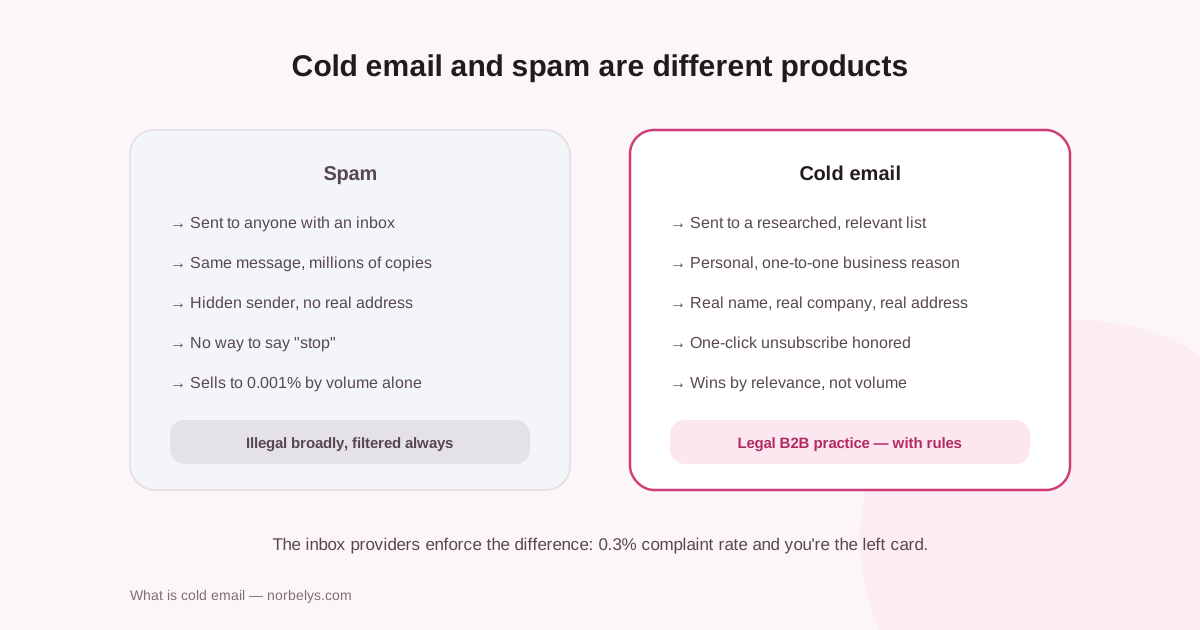
Cold email vs. spam — the actual line
| Cold email | Spam | |
|---|---|---|
| List | Researched, relevant, small | Anyone with an inbox |
| Message | Personal, about the reader | Identical, about the sender |
| Identity | Real name, company, address | Hidden or forged |
| Opt-out | One click, honored instantly | None, or a trap |
| Economics | Wins by relevance | Wins by volume |
The receiving networks enforce this line mechanically. Since the Gmail and Yahoo sender rules took effect in 2024, bulk senders must authenticate (SPF, DKIM, DMARC), offer one-click unsubscribe, and stay under a 0.3% spam-complaint rate — with 0.1% as the working target. Cross the line and you’re treated as the left column regardless of your intentions. The full rules are in Gmail & Outlook sender requirements.
Is cold email legal?
In the US — yes. CAN-SPAM explicitly permits unsolicited commercial email as long as you don’t use deceptive headers or subjects, you identify the message as commercial, include a physical address, and honor opt-outs promptly. We wrote up what CAN-SPAM actually requires — it’s shorter than its reputation.
In the EU — regulated, not banned. GDPR and the ePrivacy rules generally require either consent or a defensible legitimate-interest basis for B2B outreach, with member states differing in strictness. B2B email to corporate addresses about genuinely relevant business matters is commonly practiced under legitimate interest — but if your list is heavily EU, read up specifically and keep your relevance argument written down.
Everywhere — the practical bar is higher than the legal one. A legal email that annoys 1 in 300 recipients enough to hit “report spam” still kills your domain. The economics force you to be better than compliant.
The four pillars of doing it right
1 · A list that deserves the email. Define who has the problem, source contacts accordingly, and verify every address before sending — over 2% bounces and providers start rejecting you. The process: how to build a lead list that doesn’t bounce.
2 · Infrastructure that can carry it. A secondary domain, authentication that passes in one check, mailboxes warmed for 2–4 weeks, and volume under ~40/day per mailbox.
3 · A message about the reader. Under 100 words, a first line that proves homework, one ask. Templates help with structure — the research minute is what makes them work.
4 · Follow-up with manners. Three to five sends over 2–3 weeks earns 42% of all replies; a working unsubscribe and a genuine “no problem” on rejection keep complaint rates at rounding-error levels.
What results look like
Honest benchmarks, from large published studies rather than tool marketing: 95–98% delivered, 3–8% replies on competent campaigns, with top-decile personalization reaching 17–18%. Reported “open rates” of 40–60% are mostly robots and proxies — judge campaigns on replies. The full numbers with sources: cold email benchmarks, and the working math from list to meetings: 1,000 sends, end to end.
Where to start
The pre-send checklist compresses all of the above into four gates you can run in an afternoon. And if you’d rather the infrastructure part just be handled — warmup free and automatic, verification on every import, pacing and reputation guards built in, only human opens counted — that’s the product this blog pays the rent for.