Cold calling vs. cold email: the honest math, not the holy war
Cost per conversation, cost per meeting, and what each channel actually wins at — dials cap at 60–80 a day, email compounds while you sleep, and the best teams sequence them instead of choosing.
By Norbelys Chirinos, Co-founder
Founder-reviewed ·How we research and correct articles
Every few months the same argument re-runs: “cold calling is dead” versus “email is spam, pick up the phone.” Both camps are selling something. The useful question isn’t which channel is better — it’s what each unit of effort buys you in each channel, and when to spend where.
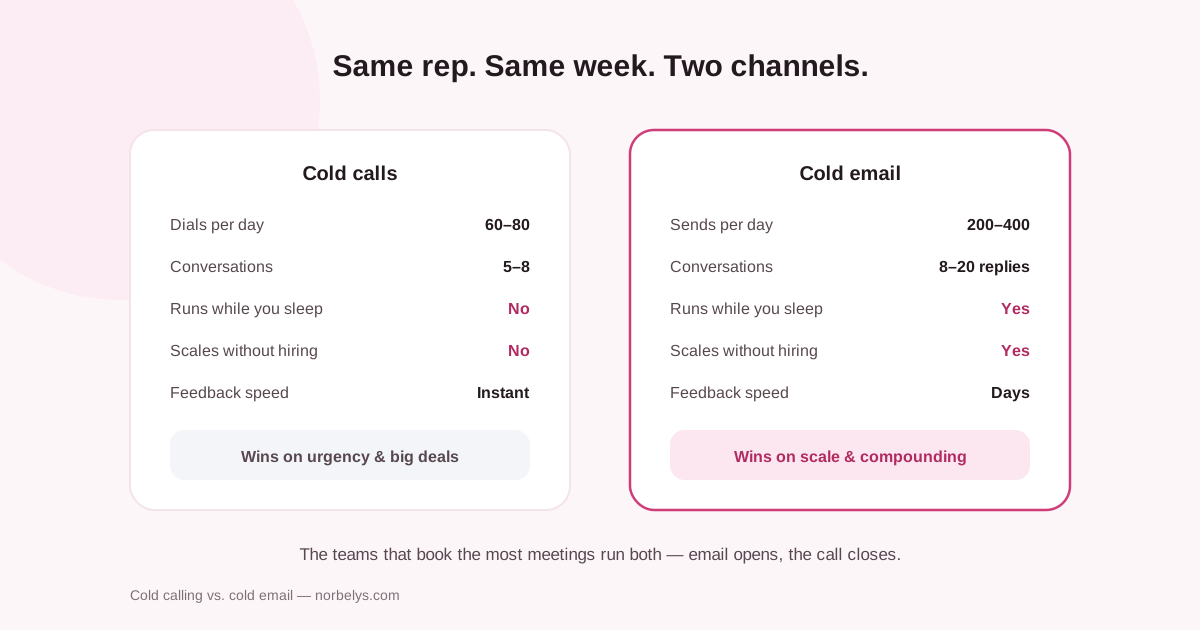
The unit economics of one rep-day
A competent SDR makes 60–80 dials in a focused day and lands 5–8 live conversations — the rest is voicemail, gatekeepers and dead numbers. That number has been stable for a decade because it’s limited by physics: calls happen in real time, one at a time, during business hours.
The same rep running email properly — verified list, warmed mailboxes, personalized firsts — comfortably supports 200–400 sends/day across a compliant mailbox pool, which at honest benchmark rates (3–8% replies) returns 8–20 replies a day. Crucially, those arrive while the rep is doing something else — including sleeping.
Illustrative mid-points of the ranges discussed in this post.
So email wins? On volume per effort, decisively. But conversations aren’t interchangeable.
What the phone actually wins
- Bandwidth. Five minutes of voice carries tone, objections, and the real reason behind the polite no — things email surfaces over days, if ever.
- Urgency. A call interrupts; an email waits its turn. When the offer is time-critical, interruption is a feature.
- Deal size. The bigger and more relationship-driven the deal, the more a voice at the right moment outperforms any sequence.
- Instant qualification. One conversation can disqualify a prospect that six emails would have politely chased for a month.
What email actually wins
- Scale without headcount. Doubling call volume means hiring. Doubling email volume means more mailboxes and domains, set up in a week.
- Asynchrony. Prospects answer at 7am, 11pm, Sunday afternoon — reply-timing data shows a long tail no calling window can cover.
- A written record. Every send, open and reply is measurable — which makes email the only channel where A/B testing on real replies systematically improves the message.
- Compounding. A sequence runs for weeks per prospect; 42% of replies arrive on follow-ups no rep would have had the discipline to make as calls five through eight.
- The reader’s terms. An email can be forwarded to the actual decision maker. Cold calls don’t forward.
The sequencing answer
The teams that book the most meetings stopped choosing years ago. The pattern that works:
- Email opens. Two to three researched, specific emails establish who you are and why them — cheaply, at scale.
- The phone strikes on signal. A reply, a pricing-page visit, a forwarded thread — engagement turns a cold call into a warm one. “Calling about the email I sent Tuesday” has a fundamentally different answer rate than a true cold dial.
- Email closes the loop. Recap, calendar link, materials — in writing, where they forward.
This is also the honest resolution of the multichannel argument: sequence channels by what each is good at, rather than blasting every prospect on every channel simultaneously and calling the annoyance “omnichannel.”
The gotcha both camps skip
Phone numbers and emails both go stale. People change jobs, companies change domains, and old contact files accumulate risk. Re-verify the list before each campaign. Whichever mix you run, the list is the foundation, and a bad one wastes dials and burns domains with perfect even-handedness.
If your mix includes email at any serious volume, the boring parts decide the outcome: warmed mailboxes, verified lists, authentication that passes, and reply numbers you can trust. That last one matters more than people admit — when half your opens are robots, the channel comparison spreadsheet is fiction unless someone is counting only humans.